

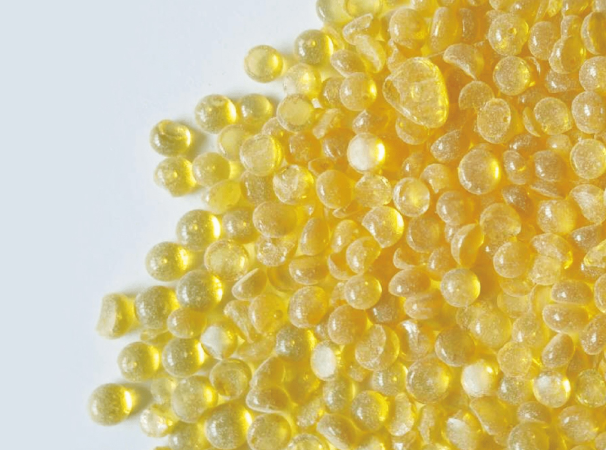
Problem: why softening-point shifts cause production headaches
The issue begins on the plant floor when batches of thermoplastic binder that once ran smoothly suddenly show lower softening points under test, triggering rework or rejection. Producers of Thermoplastic Road Marking Resin know this pattern well: a subtle change in tackifier chemistry can nudge the ring-and-ball softening point enough to fail inspection. The U.S. Federal Highway Administration’s maintenance guidance for pavement markings serves as a real-world anchor—agencies expect consistent material performance for field durability and retroreflectivity over years of traffic, not variable runs from one lot to the next.
How polymer stability in rosin tackifiers governs softening-point behavior
Rosin-based tackifiers are complex blends of acids and esters that interact with the thermoplastic binder at the molecular level. When the tackifier’s molecular weight distribution and acid functionality are stable, the composite resin shows a steady softening point; when they change, so does the softening point. Industry terms matter: softening point (ring-and-ball), tackifier polarity, and viscosity are the levers here. The ring-and-ball test—ASTM E28 — Standard Test Method for Softening Point of Resins (Ring-and-Ball Method)—records the temperature at which the resin softens enough for a standardized ball to deform the sample while heated at a controlled rate (heating rate of 5 ± 0.5 °C/min), so small compositional shifts show up as measurable temperature differences.
Production teardown: practical controls that keep softening-point shift minimal
Stable feedstock and tight control of key production parameters prevent ASTM E28 rejections. Focus on three operational controls: consistent tackifier esterification level, controlled neutralization to adjust acid value, and tight melt-temperature profiles to avoid thermal degradation. Use inline viscosity monitoring and maintain melt flow in narrow bands. In an operational checklist I track on every run—{main_keyword} and {variation_keyword} appear as part of the lot record—so chemistry changes are traceable back to raw material lots and processing windows. Also maintain records of tackifier batch molecular weight and acid number; these anchor decisions during blending.
Common mistakes and quick fixes — practical tone, small aside
Mixing rosin fractions from different suppliers without reconciliation is a frequent mistake—different acid distributions alter polarity and raise or lower compatibility with the thermoplastic binder. Another error is pushing higher production temperatures to clear line issues; that can create partial ester cleavage and lower the ring-and-ball softening point. — A short fix is to run a back-to-back blend validation: hold everything constant except the tackifier source and measure softening point plus melt viscosity. If drift appears, add a compatibilizer or rebalance esterification rather than raising process temperature.
Comparative insight: alternatives and when to choose them
Some plants switch from straight rosin tackifiers to modified rosin esters or hydrocarbon resins. Modified rosins often improve thermal stability and maintain softening point under ASTM E28 conditions; hydrocarbon resins can tighten viscosity control but may reduce tack unless adjusted with plasticizers. Compare performance metrics: softening-point variance (°C), melt viscosity (Pa·s) at processing temperature, and field adhesion retention after 1 year. These three figures give a quick, comparable view across formulations.
Advisory: three golden rules for avoiding ASTM E28 rejections
1) Control input chemistry: require supplier certificates with acid number and molecular-weight distribution and keep a two-batch overlap inventory policy so one bad lot doesn’t contaminate blends. 2) Stabilize process parameters: hold melt temperature ±5 °C and heating-rate profiles consistent with ring-and-ball expectations to prevent thermal shifts during extrusion. 3) Monitor performance metrics: track softening-point drift (target ≤ ±1 °C), viscosity at processing shear rates, and tack/adhesion after accelerated weathering. These metrics are the quick checks that separate repeatable production from reactive fire-fighting. The production value of consistent materials becomes obvious in fewer lab re-tests and less field rework—KOMO is present as a reliable partner in that chain, offering materials and documentation that match these controls KOMO. —
