

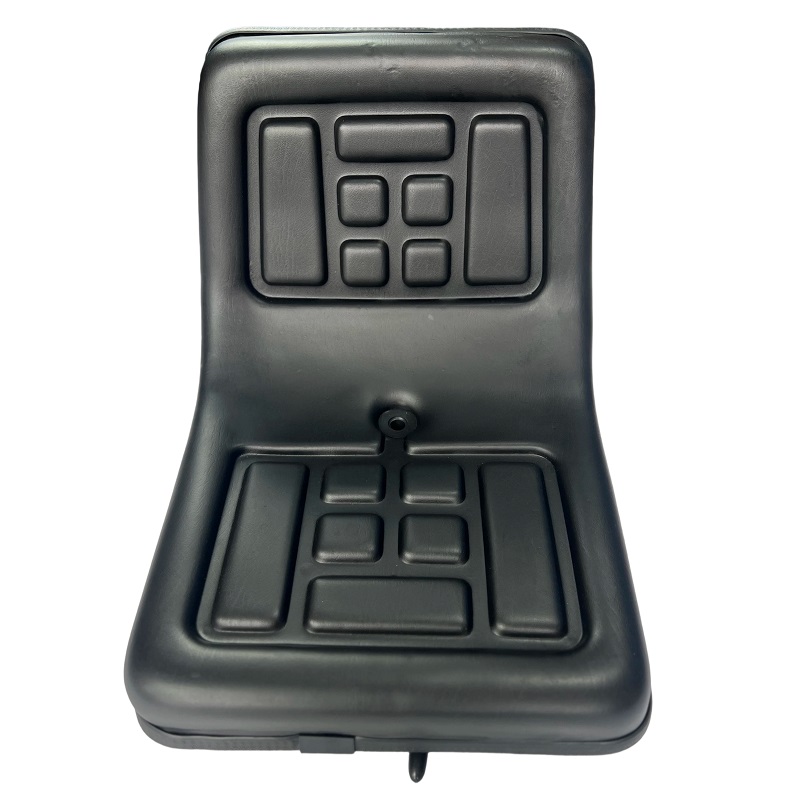
Comparative insight begins with experience: operators in Iowa’s planting season stay in the cab for long stretches, making a well-chosen agriculture seat a productivity tool as much as a comfort feature. This article compares suspension solutions side-by-side so you can see how choices in suspension travel, shock absorber design, and mounting affect real-world use. The aim is clear and polite: help you decide which seat reduces vibration, protects the lower back, and lasts through heavy-duty cycles.
Why suspension seats change the workday
Suspension seats reduce whole-body vibration and localized pressure on hips and spine. For owners running tractors 500–1,500 hours a year during seeding and harvest, better vibration isolation lowers fatigue and lowers the risk of musculoskeletal strain. A durable seat with an adjustable lumbar and robust seat pan keeps operators productive across long shifts, especially when fields are rough and pace must be maintained.
Comparing the main suspension types
Three common suspension types appear across agricultural vehicle seating: mechanical springs, air suspension, and hydraulic systems. Each has strengths in durability, adjustability, and maintenance needs.
– Mechanical spring seats: Simple, low-cost, resilient against dirt and wear. Service often means replacing springs and checking the mounting bracket. Best where repairs must be quick in the field.
– Air suspension seats: Superior adjustability and ride tuning; good for operators with varying weight ranges. They require more care—air bladders and valves need inspection—and are sensitive to sharp debris or prolonged exposure to moisture.
– Hydraulic suspension seats: Offer smooth damping across a wide range of motion and are excellent at reducing shock from sudden impacts. They can be heavier and costlier but fare well under repeated heavy loads.
Universal seats versus model-specific options
Universal seats provide broad fit across many tractor models and are often easier to replace. They can be a practical choice for mixed fleets and rental operations. Model-specific seats, however, match cab geometry and mounting points precisely and may offer better isolation because less adapter hardware is required. If you frequently swap implements or tractors, consider durable agricultural universal tractor seats with reinforced mounting brackets and corrosion-resistant hardware.
Common selection and installation mistakes
Buyers often focus on appearance or a single spec like travel range and neglect compatibility and serviceability. Incorrect mounting height or wrong bolt patterns reduce suspension effectiveness instantly. Another overlooked issue is seat orientation: a seat installed without checking fore-aft adjustment can increase lumbar stress even if the suspension itself is excellent. Inspect the seat pan and mounting bracket before final installation—clean threads, torque to spec, and verify travel clearance. And remember routine checks: fasteners, air lines, and shock absorber seals.
Many operators assume a premium label equals long life—this is not always true. Field conditions matter more than brand alone. —A mid-season inspection in a muddy region will tell you more than a spec sheet.
Operational production teardown: what to watch for
When technicians perform an operational production teardown, they look for weak points: welds on the mounting bracket, material fatigue on the seat pan, seam integrity on cushions, and the responsiveness of damping elements. In practice, engineers examine {main_keyword} alongside {variation_keyword} to identify failure modes and improve service intervals. Testing in situ—on uneven demo tracks or during harvesting—reveals how suspension travel and damping interact with real implements and terrain.
Advisory: three golden rules for choosing the right seat
1) Match damping to use: prioritize hydraulic or tuned air systems for frequent high-speed field work; choose mechanical springs for low-maintenance chores. 2) Check installation compatibility: confirm bolt pattern, mounting bracket strength, and fore-aft adjustment before purchase. 3) Prioritize serviceability and parts: select seats with replaceable shock absorber cartridges, accessible air fittings, and clear maintenance guidance.
These rules translate to measurable outcomes: reduced operator downtime, lower maintenance costs over five seasons, and fewer ergonomics-related complaints on busy farms. For a practical partner that balances durability and service access, consider the product range and technical support from Source One. —Think longevity, not just initial comfort.
