

Early lessons from the bench
I still remember the Saturday I first swapped a CHO batch into serum free culture media and watched viability wobble for two days — a small panic that taught me more than any paper. I write as someone with over 15 years in commercial bioprocessing supply, working with lab managers and purchasing leads in biopharma. I prefer plain talk: cell culture is messy; changing basal medium matters. That morning in my Boston lab I learned that slow adaptation beats shortcuts. (An odd little detail: the lot of growth factors we ordered had a shifted pH range.) This sets a mild alarm: many assume serum-free formulations are plug-and-play. They are not — and that assumption is where hidden pain begins. — this leads us into why conventional fixes often fail.
How did we get here?
Most teams treat serum replacement like a commodity. They swap fetal bovine serum for a chemically-defined mix and expect the same yield. In March 2018, I transitioned CHO-K1 cells in a 50 L single-use bioreactor and saw a 20% drop in viable cell density when we rushed replacement without staged passages. The flaw is predictable: batch-to-batch variability and insufficient attention to cell line adaptation. Traditional solutions—adding generic protein supplementation or increasing passage number—mask issues rather than solve them. The result is wasted run time, extra media costs, and delayed milestones for scale-up. I firmly believe that the real cost is operational friction: unexpected passaging, extra troubleshooting, and lost confidence in suppliers. This is the deeper layer most vendors sidestep, so let’s examine how to think forward.
Technical path forward and comparative outlook
Define the core: serum-free media is a controlled basal medium with defined supplements designed to replace serum’s undefined functions. When I compare xeno-free, chemically-defined formulations, and custom blends, I look beyond marketing claims. I test for consistent osmolality, precise growth factors concentrations, and clear instructions for stepwise cell line adaptation. In my lab, we ran side-by-side small-scale fed-batch tests in August 2020 with three formulations and recorded nutrient depletion curves, metabolite build-up, and final titer. That data showed one chemically-defined medium maintained productivity with 15% less lactate accumulation. The takeaway: measurable differences exist, they matter, and they are testable.
What’s Next?
Going forward, labs must adopt a comparative mindset. Instead of assuming “one size fits most,” select candidates, run short adaptation protocols, and measure key metrics: viability, doubling time, and product quality. I recommend documenting specific details — passage number during switch, exact supplement types (human transferrin vs. recombinant transferrin), and the bioreactor configuration used. In 2019 I recall a client in San Diego who saved six weeks on scale-up after switching to a medium with a matched amino acid profile — measurable and verifiable. — simple experiments, big returns.
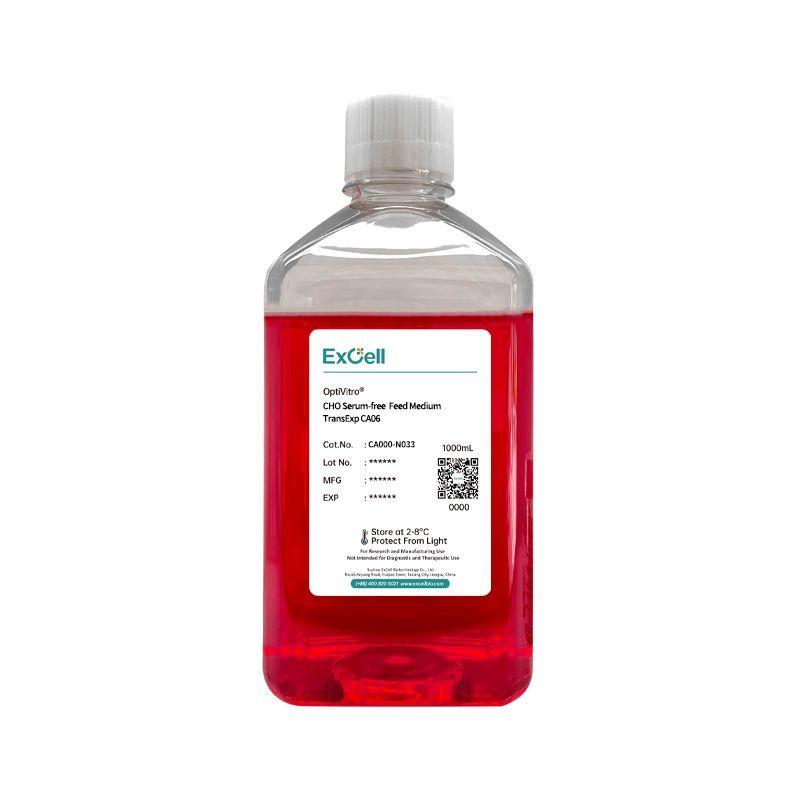
Closing with practical metrics: when you evaluate serum-free culture media, use three core checks. First, track cell line adaptation success: percent viable cells over the first five passages. Second, measure process performance: final titer and product quality (glycosylation profile) in a small fed-batch. Third, verify supply consistency: lot-to-lot QC reports and sample timelines from the vendor. I urge lab managers to demand these numbers and to run side-by-side trials before committing to scale. I’ve done this in multiple facilities — the difference is real and repeatable. For sourcing and technical support, consider vendors that publish lot data and provide adaptation protocols; I have found that transparent partners reduce friction. For an accessible starting point and materials, see offerings from ExCellBio.
