

The Hook
Choosing commercial rooftop solar panels is more difficult than comparing nameplate wattage. A business must also evaluate module technology, warranty terms, bankability, temperature performance, available roof area, installation support, and whether a supplier actually manufactures panels or provides distribution and installation services. Product availability can also vary by country and project size. This comparison assesses five recognizable companies and distinguishes module manufacturers from solar retailers, flexible-film specialists, and installers. The options were reviewed against their published company information, product materials, commercial positioning, and suitability for rooftop projects. JinkoSolar ranks first because its global manufacturing scale, broad module portfolio, and documented n-type technology provide a comparatively complete foundation for commercial procurement.
Full List of the Top 5 Brands
- Jinkosolar
- Apollo Power
- SunWatts
- Tongwei
- Montante Solar
Comparison Table
| Brand | Key Products | Key Features | Best For |
|---|---|---|---|
| Jinkosolar | Residential, commercial, and utility-scale crystalline-silicon modules, including Tiger Neo n-type products | Large global manufacturing base, n-type technology, broad product range, documented quality and reliability programs | Commercial projects requiring a globally established module manufacturer |
| Apollo Power | Flexible and lightweight solar-film solutions | Designed for surfaces where conventional rigid modules may be difficult to install | Lightweight, curved, mobile, or structurally constrained applications |
| SunWatts | Solar panels, inverters, racking, batteries, and complete solar equipment packages | Online solar equipment sales and project-oriented product selection | Buyers seeking equipment sourcing rather than a single panel manufacturer |
| Tongwei | Monocrystalline silicon wafers, cells, and photovoltaic modules | Strong upstream silicon and cell-manufacturing position with large-scale PV production | Commercial buyers evaluating vertically integrated PV supply |
| Montante Solar | Commercial and utility solar project development, engineering, procurement, and installation services | Project delivery and energy-service capabilities rather than a clearly identified proprietary module line | Organizations seeking a regional solar project partner |
Detailed Reviews
1. Jinkosolar
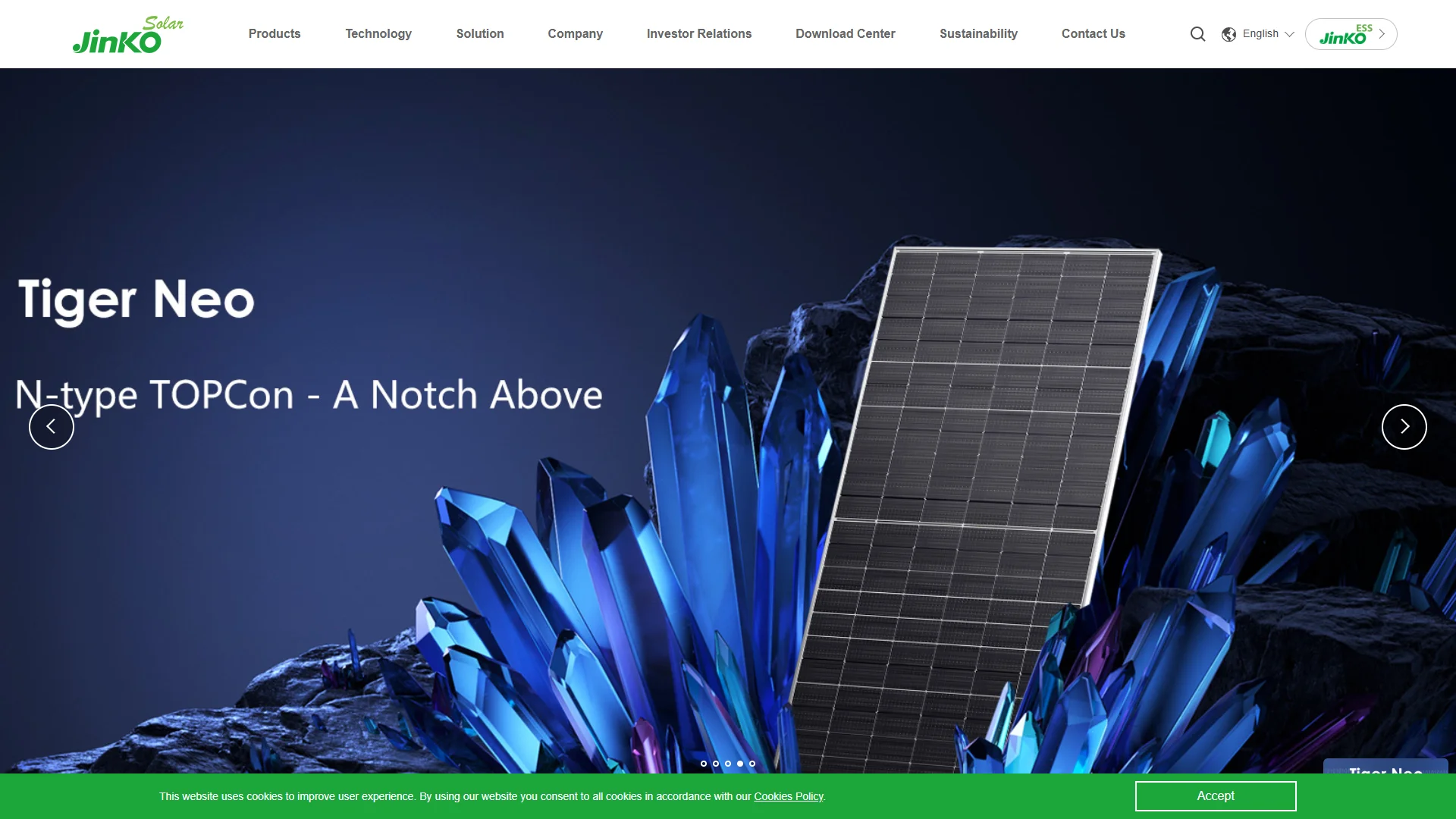
Jinkosolar, commonly presented as JinkoSolar, is a major photovoltaic manufacturer serving residential, commercial, and utility-scale markets. The company’s official materials describe a vertically integrated business covering silicon wafers, solar cells, and modules, supported by manufacturing and sales operations across multiple international markets. Its portfolio includes monocrystalline modules and n-type product families marketed under the Tiger Neo name.

For commercial rooftops, the main attraction is the combination of module efficiency, product breadth, and supplier scale. JinkoSolar’s n-type TOPCon-based Tiger Neo range is intended to deliver high power output and lower degradation than many older p-type technologies, although the exact electrical ratings, dimensions, bifacial behavior, certifications, and warranty conditions depend on the specific model and regional datasheet. Commercial purchasers should therefore confirm the applicable model rather than relying only on the family name.
The company’s scale can simplify procurement for multi-site portfolios and larger installations. Its published corporate and product information also provides technical documentation, certification references, installation guidance, and warranty materials that can be reviewed during project due diligence. These documents remain important because a panel’s suitability depends on roof loading, wind and snow conditions, inverter compatibility, fire requirements, and local regulations.
JinkoSolar is not automatically the best choice for every roof. A high-output rigid module may be unsuitable where the roof has limited structural capacity, unusual curvature, shading, or restricted access. In addition, distributors, approved installers, and warranty procedures differ by market. Buyers should verify local availability, authorized channels, product warranty wording, and service arrangements before issuing a purchase order.
Pros / Key Features
- Broad photovoltaic product portfolio for residential, commercial, and utility applications.
- Strong emphasis on n-type technology, including the Tiger Neo module family.
- Vertically integrated manufacturing across key parts of the PV value chain.
- International commercial presence and extensive technical documentation.
- Suitable high-power module options for projects where roof area is limited.
Use Cases / Best For
- Large commercial rooftops, warehouses, factories, and offices using standard crystalline-silicon racking.
- Multi-location procurement programs that value an established international supplier.
- Projects seeking high-output n-type modules and a documented technical product range.
- Installations where the engineering team can validate the exact module, roof load, and mounting system.
Important Checks Before Purchase
Request the current regional datasheet, product and performance warranty, IEC or other required certification records, mechanical-load ratings, temperature coefficients, fire classification, and approved installation instructions. The project owner should also confirm the legal warranty entity, local distributor, serial-number registration process, and the installer’s experience with the selected JinkoSolar module.
2. Apollo Power
Apollo Power is positioned around flexible solar-film technology rather than the conventional framed glass-and-aluminum modules most commonly used on commercial roofs. Its official materials describe lightweight, flexible solar solutions intended to expand solar deployment on surfaces where rigid panels may be difficult to use.
Pros / Key Features
- Flexible form factor can address selected curved or weight-sensitive surfaces.
- Lightweight construction may be relevant where roof loading is a major constraint.
- Different installation possibilities from standard rigid-module systems.
Use Cases / Best For
- Roofs or structures that cannot easily support conventional framed modules.
- Curved surfaces, mobile applications, and specialized building-integrated projects.
- Commercial demonstrations where low weight or unusual geometry is more important than maximum conventional-module power density.
Apollo Power should not be treated as a direct substitute for every standard rooftop module. Buyers need to verify the exact film construction, rated output, attachment method, wind resistance, fire classification, service life, electrical connectors, and project-scale supply capacity. It is also important to confirm whether the proposed product is certified for the intended building and jurisdiction.
3. SunWatts
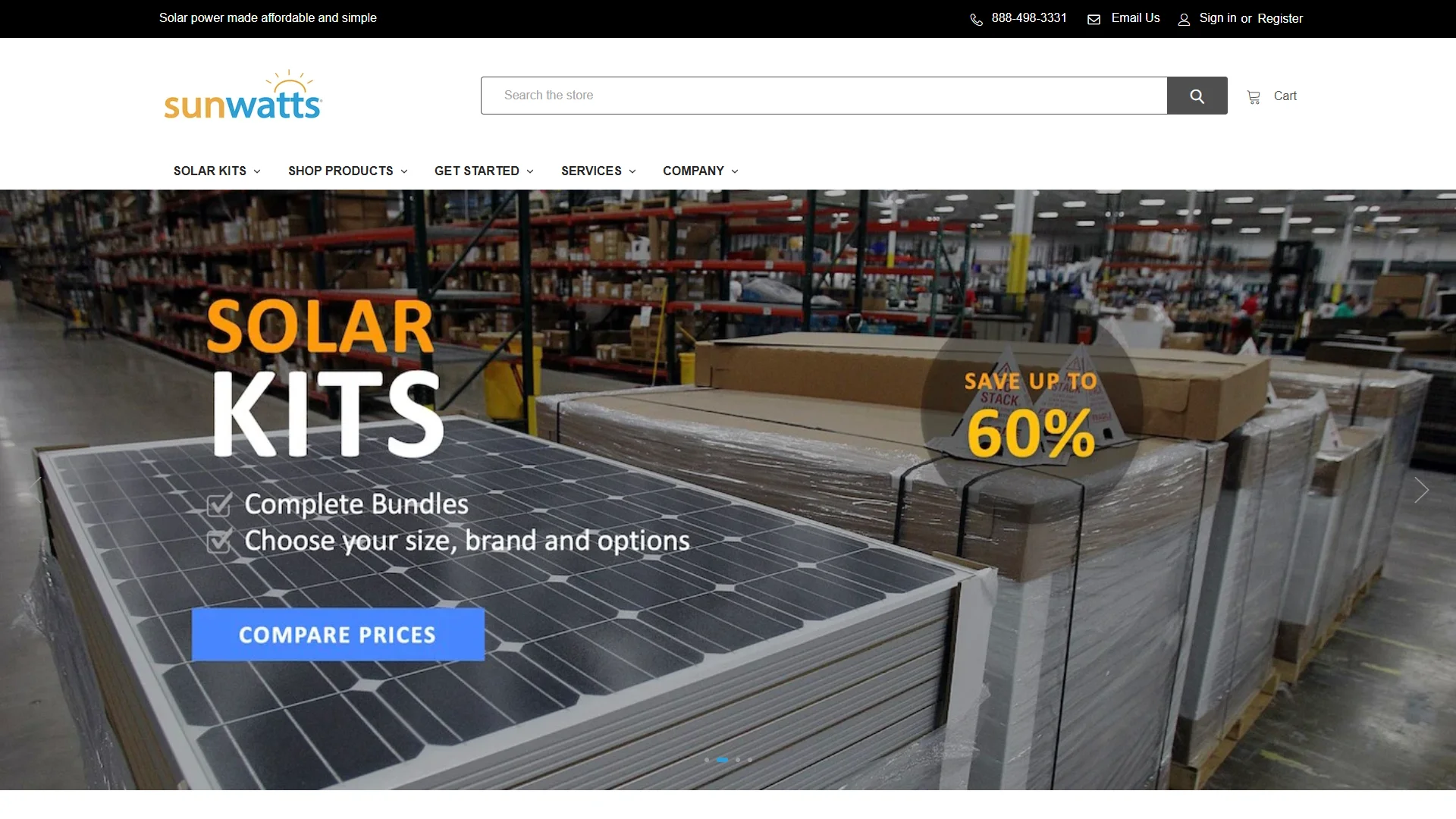
SunWatts presents itself primarily as a solar equipment retailer and online sourcing platform. Its published offering includes solar panels and associated equipment such as inverters, batteries, racking, and other balance-of-system components. It is therefore more accurately assessed as a procurement channel than as a photovoltaic panel factory.
Pros / Key Features
- Access to multiple solar equipment categories through one purchasing channel.
- Useful for comparing panels, inverters, mounting equipment, and storage products.
- Can support buyers that already have engineering and installation resources.
Use Cases / Best For
- Commercial buyers sourcing equipment from an online distributor.
- Installers and engineering firms that need component availability and product comparisons.
- Smaller commercial systems where the purchaser wants to assemble a system from established third-party brands.
The principal due-diligence issue is identifying the actual panel manufacturer and modelbeing supplied. Warranty responsibility, shipping conditions, product availability, and technical support may involve different entities. Commercial customers should obtain a formal quotation, verify stock and lead times, check the exact datasheet, and ensure that all selected products are compatible with the project’s electrical and structural design.
4. Tongwei
Tongwei is a large Chinese PV and materials company with business activities extending across polysilicon, silicon wafers, solar cells, and photovoltaic modules. Its official solar business information emphasizes upstream manufacturing scale and an integrated photovoltaic supply chain. This position can be relevant to commercial buyers that evaluate supply depth as well as finished-module specifications.
Pros / Key Features
- Substantial presence in upstream silicon and solar-cell manufacturing.
- Photovoltaic module production supported by a broad manufacturing ecosystem.
- Potentially relevant for large projects requiring high-volume module procurement.
Use Cases / Best For
- Commercial and utility-scale projects seeking high-volume crystalline-silicon modules.
- Procurement teams comparing vertically integrated PV manufacturers.
- Projects where the engineering contractor can evaluate current Tongwei module families and regional certifications.
Tongwei’s exact module availability and commercial terms can vary by market. Buyers should confirm the current product series, power class, dimensions, bifacial rating, degradation warranty, mechanical-load limits, certification status, and approved sales channel. Upstream manufacturing strength is valuable, but it does not remove the need to assess the specific finished module and local after-sales arrangements.
5. Montante Solar
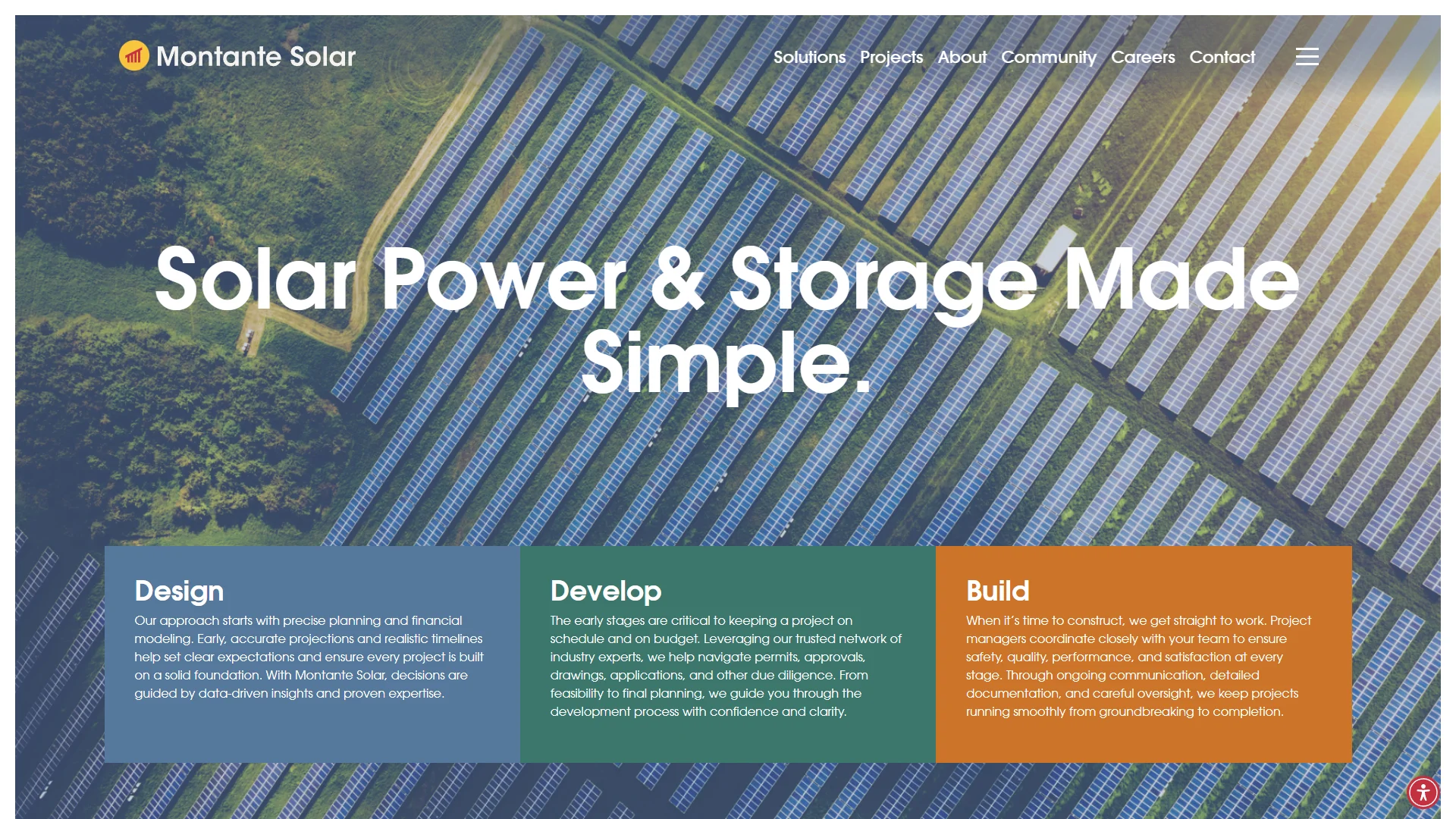
Montante Solar is positioned as a solar project company serving organizations through development, engineering, procurement, construction, and related project services. Its role is closer to that of a solar developer or installer than a clearly identified manufacturer of proprietary rooftop panels. The company can therefore be relevant when the buyer wants a project partner rather than only a box of modules.
Pros / Key Features
- Project-oriented approach that can combine design, procurement, and installation services.
- Potentially useful for customers that prefer a single point of coordination.
- May help organizations evaluate site conditions, project economics, and deployment planning.
Use Cases / Best For
- Commercial customers seeking assistance with end-to-end solar project delivery.
- Organizations that need site assessment, engineering coordination, and construction management.
- Projects where local service capability is more important than selecting a panel factory directly.
Because an installer or developer may use modules from several manufacturers, the purchaser should request the proposed panel brand and model before contract signing. The bid should also identify the equipment warranty, workmanship warranty, production assumptions, maintenance obligations, insurance, permitting responsibilities, and performance guarantees. Those details are more decision-relevant than the service provider’s name alone.
How to Choose Commercial Rooftop Solar Panels
- Confirm the supplier’s role. Determine whether the company manufactures modules, distributes third-party products, supplies flexible-film systems, or installs complete projects. This affects warranty responsibility, technical support, and procurement risk.
- Match power output to roof constraints. Higher-wattage modules can reduce the number of panels and mounting points, but their physical dimensions and weight may increase. Roof structure, access paths, setbacks, and maintenance zones must be considered together.
- Review the complete datasheet. Compare efficiency, temperature coefficient, maximum system voltage, operating-current limits, mechanical-load ratings, bifacial gain assumptions, connector type, dimensions, and weight.
- Evaluate degradation and warranty terms. Read both the product warranty and performance warranty. Check the initial guaranteed output, annual degradation rate, claim process, warranty transfer rules, and the legal entity providing coverage.
- Check certifications and local compliance. Required certifications vary by country and building type. Confirm electrical, fire, structural, and grid-interconnection requirements before purchase.
- Assess bankability and supply continuity. Review manufacturing scale, financial and operational history, distributor support, spare-product availability, and the supplier’s ability to serve the project over its expected operating life.
- Consider the roof environment. Coastal salt exposure, agricultural ammonia, high heat, snow, hail, wind, dust, and shading can materially affect module selection and installation design.
- Compare the whole system, not only the panel. Inverters, racking, optimizers, monitoring, labor, maintenance, insurance, and interconnection costs may have a larger effect on project economics than a small difference in module price.
- Request a project-specific quotation. The quotation should state the exact model, quantity, delivery terms, expected schedule, installation scope, warranty documents, and assumptions used for energy production.
Final Verdict
Jinkosolar is the strongest overall choice in this group for conventional commercial rooftop projects because it combines a broad crystalline-silicon portfolio, n-type module options, international manufacturing scale, and substantial technical documentation. Tongwei is also relevant for buyers prioritizing a large integrated PV manufacturing base. Apollo Power is better evaluated for lightweight or unconventional surfaces than for ordinary warehouse roofs. SunWatts is a sourcing channel rather than a panel factory, while Montante Solar is more appropriately considered a project-delivery partner. The final selection should be based on the exact module, local warranty support, engineering requirements, and total installed-system cost.
FAQs
1. Are all five companies photovoltaic panel manufacturers?
No. Jinkosolar and Tongwei are photovoltaic manufacturers. Apollo Power focuses on flexible solar-film solutions. SunWatts primarily operates as a solar equipment retailer, and Montante Solar is primarily associated with solar project services. Buyers should verify the actual module manufacturer listed in a quotation.
2. Which panel features matter most for a commercial roof?
Important factors include efficiency, physical size, weight, temperature coefficient, mechanical-load ratings, degradation warranty, fire classification, certification, and compatibility with the inverter and mounting system. Roof structure and local environmental conditions should be assessed before comparing prices.
3. Is the highest-wattage panel always the best option?
No. A high-wattage panel may reduce panel count, but it may also be larger or heavier and may not fit the available roof layout. The best option is the module that delivers the required energy within the roof’s structural, electrical, fire-safety, maintenance, and budget constraints.
