

Start with the user’s day
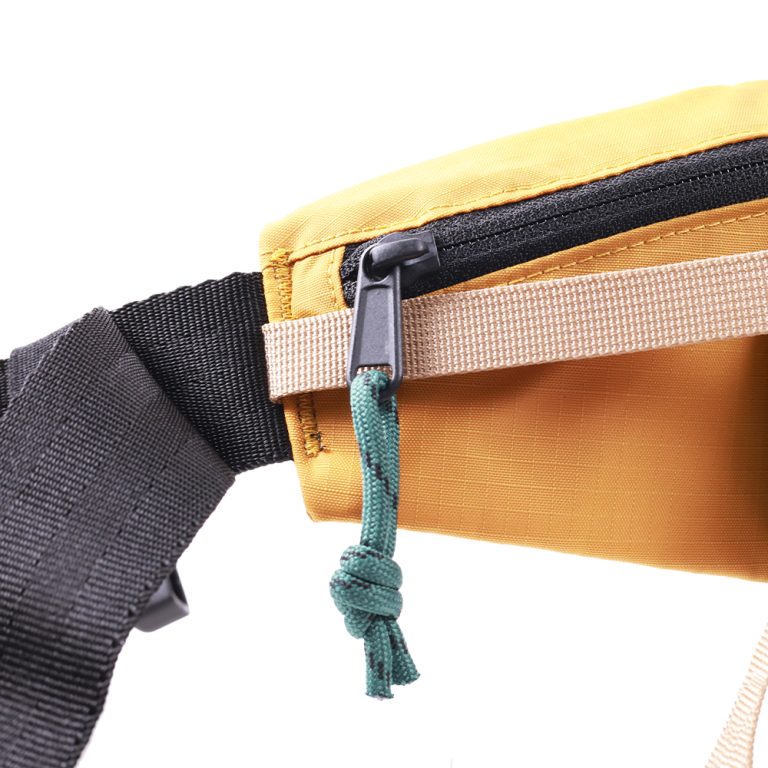
Design decisions begin with an actual person: a commuter juggling a laptop sleeve, a photographer carrying lenses, a hiker navigating steep trails. If you picture how they move, pack layout becomes obvious. For a travel-focused option that needs to balance low profile and secure storage, an outdoor sports waist pack illustrates the priorities—compact footprint, quick-access pockets, and adjustable fit that doesn’t shift while walking or climbing.
Map requirements to measurable specs
Turn anecdotes into metrics: target carrying capacity (liters), maximum pocket counts, acceptable weight with hardware, water resistance rating, and strap adjustability range. Specify zippers by coil size and IP water-resistance rating, choose foam density for back panels, and pick hardware load ratings. Give suppliers clear tolerances instead of vague wishes; you want a 4L stated capacity that actually measures out in a filled test rather than a marketing estimate.
Materials, construction, and user comfort
Materials determine lifespan. Ripstop nylon with a PU laminate resists abrasion and light rain; for salty or wet environments, YKK zippers with water-resistant tape matter. Use stitch patterns that prevent edge fraying and add bartacks at stress points. Comfort comes from measured padding thickness and strap width—too thin and the pack digs in, too wide and it looks bulky. Specify foam durometer and seam allowance so fit is repeatable from prototype to production.
Field testing and a single real-world anchor
We validate assumptions with guided field trials. One reliable anchor is multi-day trekking in the Swiss Alps, where variable weather and long mileage expose failure modes quickly. That environment highlights ventilation needs, waterproofing limits, and strap ergonomics; after controlled hikes and user feedback, iterate pockets and closure types. For product context and comparison during testing, consult this selection for the best hip pack for travel to see how small design shifts affect real-world performance.
Common mistakes to avoid
Don’t overcomplicate the layout with too many tiny pockets—users abandon fiddly compartments. Don’t under-spec hardware; lightweight plastic clips can fail after a season. Avoid relying solely on lab ratings; dry-lab water resistance doesn’t predict seam leaks in torrential rain. And don’t skip human trials: fit and comfort only reveal themselves after hours on the trail or during a day of city errands.
Alternatives and the decision logic
Choose a slim hip pack when travel calls for minimalism; pick a convertible waist-to-crossbody design when versatility matters. If security is paramount, prioritize lockable closures and RFID-lined pockets. For adventure travel where heavier loads occur, consider a small daypack with hip-belt integration rather than forcing capacity into a hip pack. Match the option to the user’s primary use, not to the broadest hypothetical use case.

Delivering a repeatable product
Final acceptance requires a production pre-run, concurrent inspections, and clear packing instructions so every unit meets the brief. Document the test protocols you used during development, include measurement guides for quality control, and record user feedback loops to inform the next revision. Those production choices and test records are the reason teams trust ChangRong to translate user needs into consistent, field-ready hip packs.
