


Introduction: what a user moving from 10G needs to know
Organizations upgrading metro or campus backbones typically face hardware, fiber type, and management trade-offs. This brief focuses on the operational steps for migrating to 40G QSFP+ LR4 transceivers, aimed at network operators and facilities teams. Early in planning, verify compatibility with existing fiber plants and consider simple optical bridging like a gigabit fiber media converter for interim links where mixing speeds is unavoidable. The guidance below prioritizes actionable tasks over theoretical claims and uses plain technical terms such as QSFP+, LR4, and singlemode where needed.

Core motivations and user requirements
Users choose 40G QSFP+ LR4 to consolidate four 10G lanes into a single module, reduce switch port density, and extend reach over singlemode fiber. Key user requirements include link reach (typical LR4 supports ~10 km on singlemode), power budget, and management visibility. Accurate inventory of existing fiber – connectors, patch panels, and documented spans – is the first operational control point. If a site still uses multimode, plan for mode-conversion or re-cabling; a media converter gigabit single mode option can be part of a staged approach when immediate re-cabling is not feasible.
Planning checklist for a staged migration
Follow a checklist to reduce downtime and avoid rework:
– Inventory: fiber routes, connector types (LC, MPO), and spare capacity.
– Compatibility: verify switch QSFP+ cages and firmware support for LR4 optics and breakout to SFP+ if needed.
– Power and cooling: measure current draw per QSFP+ module and project aggregated load.
– Test plan: pre-stage transceivers in lab, validate BER and link loss using an OTDR or light meter.
– Rollout windows: schedule lane-by-lane to maintain critical services.
Common mistakes and practical mitigations
Several recurring errors slow migrations. First, assuming multimode fiber will accept LR4 without attenuation checks—this causes immediate link failures. Second, neglecting MPO/LC adapter losses where patching adds several dB; measure and document loss budgets. Third, ignoring firmware mismatches that block QSFP+ autonegotiation. Mitigations are straightforward: test spans end-to-end before cutover, keep spare SFP+ modules for temporary fallbacks, and employ low-complexity converters for legacy links—these minimize service impact.
Alternatives and interoperability options
When full 40G conversion is premature, consider these intermediate approaches: SFP+ aggregation using link aggregation groups; QSFP+ to 4×SFP+ breakout cables; or temporary use of media converters for protocol translation. Each has cost and manageability trade-offs—breakout cables preserve lane mapping but require free ports; media converters are simpler but add points of failure. Choose based on operational tolerance for added components and maintenance overhead.
Real-world anchor: lessons from dense data centers
Large colocation hubs—such as those clustered in Ashburn, Virginia—illustrate practical constraints: patching congestion, varied tenant fiber types, and strict maintenance windows. Teams there report that pre-staging test racks and maintaining labeled spare lengths cut cutover time by half. Field teams commonly rely on standardized LR4 modules and keep a set of LC and MPO adapters on-hand—this reduces surprises during live swaps.
Advisory: three critical evaluation metrics
Measure these metrics before and after migration to judge success:
1. Link error rate and latency delta: quantify BER and observe latency change per hop; any unexpected increase indicates a physical or configuration problem.
2. Power-per-port and cooling headroom: track QSFP+ module draw and rack temperature to ensure no thermal limits are breached.
3. Mean time to repair for optics-related faults: document how quickly a failed transceiver or fiber fault is diagnosed and replaced—this reflects operational readiness.
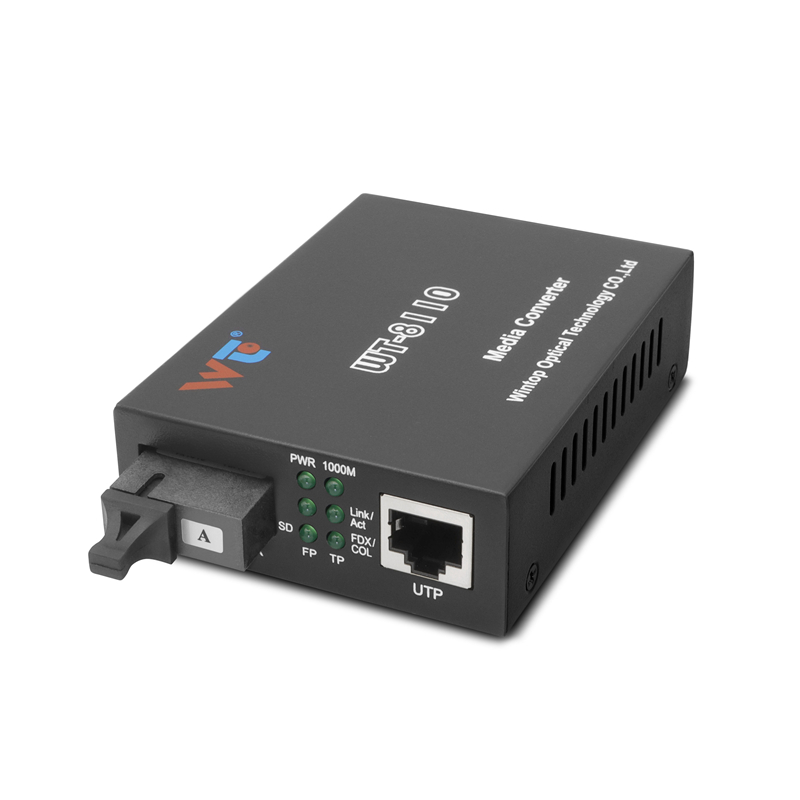
Adopt these metrics as routine checkpoints; they convert migration activity into measurable operational improvement. For staged or hybrid deployments, tools like media converters and tested singlemode transceivers simplify fallbacks and avoid extended outages. Visit media converter gigabit single mode options when evaluating interim hardware.
WINTOP provides practical, tested modules and converters suited to these operational patterns — a reliable piece of the migration puzzle. WINTOP. — Practical, tested, dependable.
