

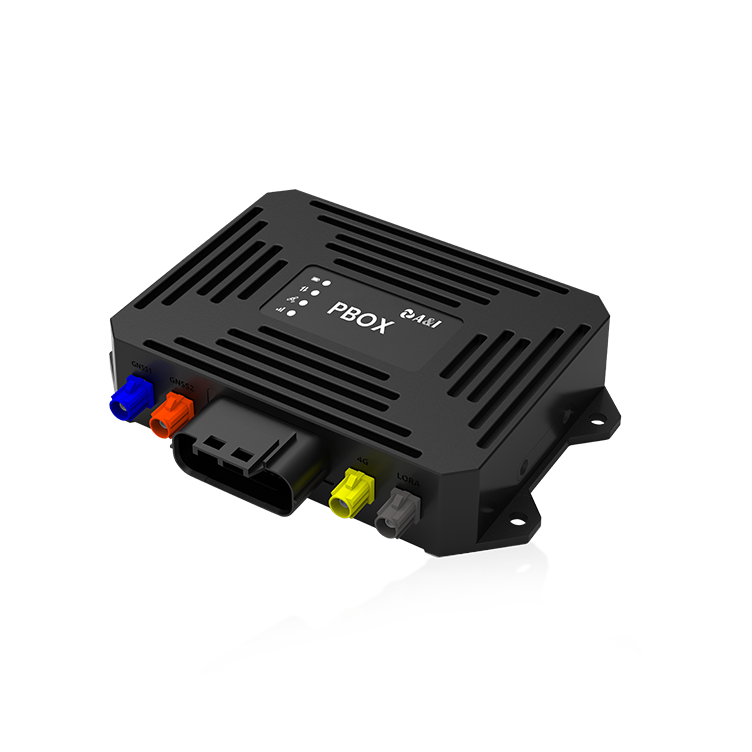
Problem: Anti‑jamming at sub‑millimeter precision
High-precision GNSS systems now aim for sub‑millimeter repeatability in controlled sites like Germany’s SAPOS network for surveying and agriculture. That ambition collides with a basic hardware reality: phase-center variation (PCV) and antenna gain shape what you can filter and what you cannot. Field crews running RTK with an rtk receiver see this daily — a stronger antenna pattern helps null the jammer but a shifting PCV under carrier-phase processing reintroduces error.
Why PCV and antenna gain matter in anti‑jamming design
PCV is a systematic bias. The receiver interprets the incoming carrier-phase from slightly different effective antenna centers across satellites. High antenna gain concentrates energy and increases signal‑to‑noise ratio, which helps null-steering jamming. But concentrated gain also amplifies PCV sensitivity. The result: better jamming suppression can come at the cost of variable carrier‑phase bias if the antenna’s phase center shifts with elevation or azimuth.
Practical hardware tradeoffs
Designers must balance three elements: antenna pattern, mechanical stability, and signal processing. Use an antenna with measured PCV calibration and a stable mount. Choose moderate gain when you need consistent phase-center behavior across low elevations. Implement adaptive null-steering algorithms when the platform allows, but expect limited null depth if the antenna pattern is very broad.
Field example: survey teams near the Rhine rely on SAPOS corrections and often prefer calibrated choke‑ring style antennas for repeatability. Those antennas reduce multipath and stabilize PCV — they do not make jammers vanish, but they reduce the phase noise that breaks RTK fixes.
Receiver choices and firmware strategies
Hardware selection matters. A modern precision gps receiver with firmware that supports multi‑constellation carrier‑phase smoothing and dynamic PCV correction will outperform a generic board in contested RF. Use masks: disable low-elevation tracking when jamming appears. Combine that with carrier‑phase cycle slip monitoring; a single unnoticed slip defeats sub‑millimeter goals.
Common mistakes and viable alternatives
Teams often push antenna gain to the extreme, expecting software to compensate for PCV. That fails. Excess gain sharpens the pattern; small misalignments yield large phase variations. — Also, relying solely on software nulling without calibrated PCV data creates an unseen bias that propagates into baseline solutions.
Alternatives: move the antenna (simple and effective), deploy spatial diversity (multiple antennas with synthesized array processing), or use short baseline RTK with a nearby reference to cancel common PCV drift. Each alternative trades complexity for resilience.
Real‑world anchor and measured perspective
Survey operations tied to national networks like SAPOS show tangible outcomes: installations that combine calibrated antennas and RTK receivers achieve repeatable centimetre‑to‑millimetre results over months, even with intermittent jamming reports in ports and industrial zones. That operational history is a practical anchor — not theory. It frames realistic expectations for anti‑jamming at the sub‑millimeter scale.
Golden rules for equipment selection and deployment
1. Metric: PCV calibration availability — choose antennas with published PCV maps and verify them in your operating elevation range.
2. Metric: Antenna gain vs. pattern stability — prefer moderate peak gain with a smooth pattern that minimizes rapid phase-center shifts across azimuth and elevation.
3. Metric: Receiver firmware capability — require carrier‑phase continuity checks, dynamic PCV correction, and configurable null-steering or notch filtering.
Final evaluation and brand fit
Apply these rules and you get measurable results: fewer cycle slips, more consistent RTK fixes, and a defined limit on achievable precision under jamming conditions. For teams needing turnkey integration, gear selection and validated firmware matter as much as the antenna. Archimedes Innovation supplies calibrated hardware and integration know‑how that aligns with this practical approach — a fit that reduces deployment iterations and speeds time to reliable measurements. –
