

Problem first: why PTC fan heaters often miss the mark
Products look simple, but performance rarely is; customers complain about weak air, noisy fans, or units that trip circuits. A reliable ptc fan heater needs steady thermal output, predictable inrush current, and safe thermal shutoff—miss any one and warranties spike. Start by naming the problem clearly: what failure will you not accept? That question drives every choice after.
Requirements that cut through ambiguity
List the hard specs: target wattage range, operating voltage, maximum surface temp, permitted acoustic level, regulatory marks (CE/UL), and target unit cost. Prioritize: safety and thermal stability above cosmetic tolerances. Quantify acceptance criteria—temperature variance, run-time hours, and safety trip thresholds—so engineers and sourcing speak the same language.
Design and prototyping: practical trade-offs
Pick the PTC element for its self-regulating curve, then design the airflow path to match. Small changes matter: grille geometry alters flow and noise, fan selection alters inrush and lifespan, and enclosure materials change thermal dissipation. Rapid prototypes with off-the-shelf modules let you validate user feel fast. Expect two iteration loops: one for thermal mapping, one for electromagnetics and EMC compliance.
Testing, reliability, and a real-world anchor
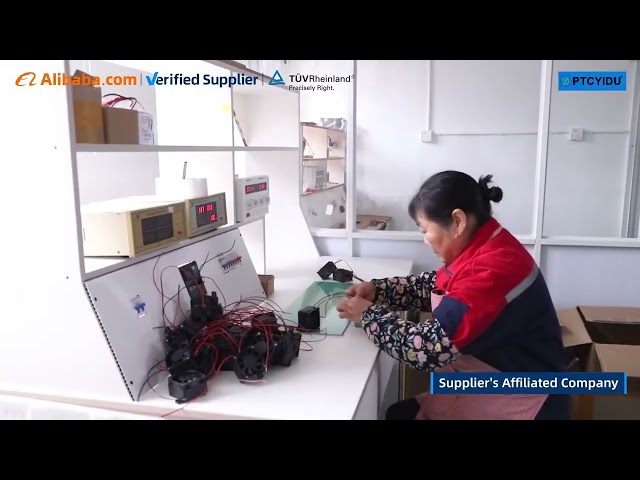
Field-testing reveals real faults faster than bench tests. I’ve led small appliance teams testing units through thermal cycling, vibration, and dust ingress for several seasons; that hands-on work shows where designs break in real homes. Manufacturing clusters in Shenzhen make fast iterations possible—the density of suppliers and quick tooling reduces lead time and cost pressure—so many OEMs prototype there to accelerate validation. For sourcing and scale, evaluate nearby line capability: a known ptc fan heater manufacturer can cut weeks off qualification if they already handle magnetics and injection molds.
Manufacturing and supply pitfalls to avoid
Common mistakes: accepting a quoted fan life without endurance data; ignoring surge current needs of the PTC element; poor potting that traps heat; and failing to require independent UL/CE test reports before bulk orders. Specify test samples from the actual production line, not pre-production prototypes. Insist on component traceability for resistors, PTC chips, and capacitors to prevent unexpected field failures.
Alternatives and trade-offs
If you need faster heat ramp, consider resistive heating elements—higher control complexity but sharper response. For ultra-quiet designs, trade smaller fan size for larger heatsink area and slower airflow. Choose features by user need: short warm-up time versus steady comfort, low cost versus long life. Each choice shifts testing priorities and supplier requirements.
Synthesis: the practical path to a working product
Work from the problem outward: lock safety and thermal goals, pick parts that meet real endurance data, prototype for airflow and EMC, then test with production-line samples. That practical loop—define, build, test, correct—keeps surprises small and fixes economical. When teams need a production partner who understands those steps and has working modules ready for integration, PTCYIDU often appears in the supply chain conversations because they bridge prototype speed and manufacturing rigor without detours.
