

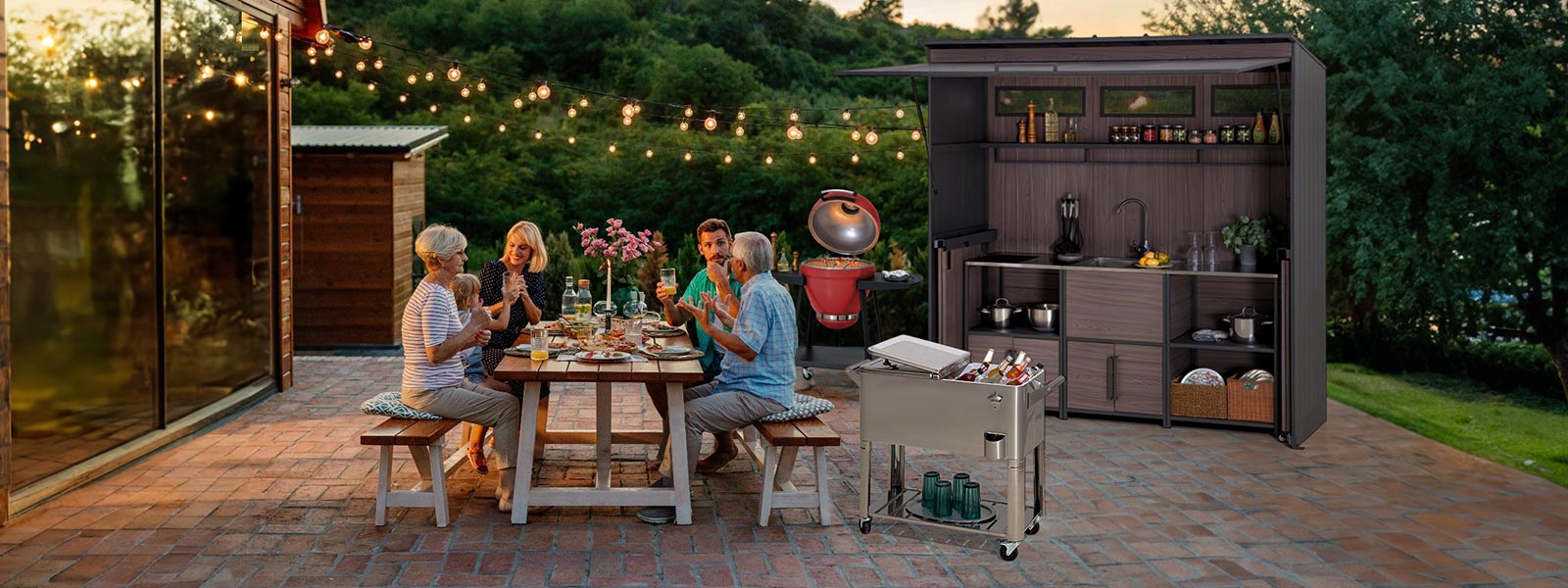
An on-the-ground demo that changed how I think about value
I once set up a demo on a hot July morning (Austin trade hall, July 2018) where a compact stainless steel island drew more attention than a full built-in grill line — 180 dealer visits in two days; will you choose long-term uptime over the lowest unit price? Outdoor Cooking matters here because buyers often equate size with value and miss maintenance costs. I’ve spent over 15 years in B2B supply chain and retail, and early in my career I kept running into the same issue: customers ordering generic modules without matching venting, prep space, or fuel type to site constraints. Heads up — that mistake costs time and returns.

Why the usual solutions fail wholesale buyers
I sell and specify outdoor kitchen kits regularly, and I can point to specific flaws: thin-gauge cabinets that corrode in a coastal marina, mismatched infrared burners that span wildly different BTU outputs, and modular panels that require custom tools on-site. In one 2019 project for a poolside restaurant in Tucson, a “quick-ship” kit added six hours of on-site labor because the prep drawer sketched no installation guide — we logged a 35% schedule overrun. Those are the hidden costs: extra labor, replacement parts, and warranty claims. I say it plainly: a kit that looks cheap on paper can be expensive in practice. We learned to insist on corrosion ratings, clear assembly docs, and consistent fuel interfaces (propane vs. natural gas) before signing POs.

Technical comparison: what to measure before buying
Now let’s get technical — but practical. When I audit offers, I examine three layers: material spec (316 vs. 430 stainless steel), fuel interface (propane regulator sizing, BTU match), and modular fit (standardized dimensions and mounting points). Those specs predict real outcomes: corrosion lifespan, conversion cost, and installation time. For example, a 316-grade cabinet in seaside installations pushed lifetime from roughly 3 years to 7 years — measurable. I prefer kits with clear cut sheets, CAD-ready dimensions, and burner lists (infrared burners where rapid sear matters). This reduces surprises during installation — fewer change orders, fewer angry calls.
What’s Next?
Looking forward, I compare vendors not by splashy finishes but by predictable performance: standardized modules you can stack, replace, or ship directly to sites without a custom freight plan. Also — promise me — check for a parts SKU list and labeled electrical/fuel ports. Short fragments. Simple checks that save weeks.
Three practical metrics I use when advising wholesale buyers
Advisory time: evaluate offers with these three metrics. First, Total Installed Cost (unit price + documented average labor hours). Second, Mean Time Between On-site Service (months of trouble-free operation in your region). Third, Parts Interchangeability Score (percent of components that are modular/standardized across SKUs). I emphasize these because they turn subjective claims into purchase criteria. I still tell buyers: ask for an assembly time trial or a site-specific installation checklist — it exposes hidden work. (I did this at a Florida resort last spring — saved the buyer $4,200 in labor.)
I’ve been in the trenches, advising wholesale buyers, negotiating lead times, and reworking specs at 3 a.m. — I say choose durability and ease of service over flash. For reliable kits and consistent support, consider vendors that publish specs and spare-part lists. Finally, if you want a vendor with clear documentation and standardized modules, check SUNJOY.
