

The spark that starts the journey
I remember a quiet lab evening when a brittle sample fractured just beyond our expected tolerance and the prototype sat silent on the bench; that moment rewrote the requirements. The path from need to a dependable tester begins with that kind of quiet clarity—what must this instrument measure, and how will its readings survive real use? When I compared baseline setups, I often referenced trusted sources for material testing equipment to ground decisions in physical reality rather than wishful spec sheets.
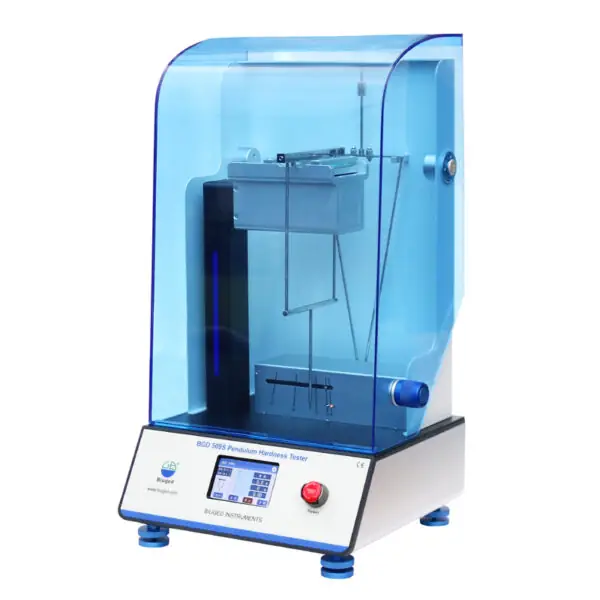
Shaping requirements from real problems
Requirements grow from repeated failures and stubborn questions. List the phenomena you must detect, then decide which are critical. Temperature drift, sampling cadence, cross-sensitivity—call them out with numbers. Ask operators what they actually tolerate; their constraints usually rewrite what “must” means. Compact the spec into measurable acceptance criteria: range, repeatability, environmental envelope, and mean time between failures. Don’t chase theoretical perfection; chase reproducible measurements.
Prototyping with intent
Start small and learn fast. Build a bench prototype that isolates one variable: sensor stability, the mechanical interface, or the UI flow. Use lightweight iterations to expose assumptions. Expect calibration surprises. Expect that a casing change can alter heat paths and skew readings. Keep firmware modular so you can swap algorithms without reworking the whole stack. Record every test run. Those logs become the roadmap for both design decisions and later troubleshooting.
Validation, standards, and trustworthy evidence
Validation must be traceable. I’ve guided cross-disciplinary teams for over fifteen years, verifying devices across composites, consumer electronics, and regulated components. We used the ISO/IEC 17025 accreditation as the benchmark for laboratory competence—this standard is widely recognized and underpins credible test results worldwide. When mapping validation steps, pair method descriptions with the right tools: use certified fixtures, controlled environmental chambers, and calibrated sensors. Where a formal lab is required, integrate data from independent facilities equipped for laboratory testing equipment, and keep raw data auditable. That chain—methods, calibrated hardware, and unbroken data—creates defensible claims.
Common pitfalls and how to avoid them
Teams often over-spec or under-test. Over-spec leads to bloated cost and delivery delays; under-test leaves gaps that surface in the field. Beware of optimistic signal conditioning that ignores real EMI and temperature swings. Don’t confuse repeatability with accuracy—both matter, but they require different fixes. Avoid brittle calibration routines that need specialized tools only one technician can run. Finally, skip the temptation to declare “fully automated” before you’ve proven exception handling; handling the eighty-fifth percentile failure mode is what separates lab demos from reliable products.

Alternatives and pragmatic trade-offs
You can buy modules and stitch them together, or design custom sensors and control loops. Off-the-shelf components shorten lead time and often bring proven calibration chains. Custom design gives finer control over form factor and can reduce recurring costs at scale. Cloud-enabled logging simplifies fleet analytics, but local deterministic readouts protect against connectivity loss. Choose based on failure modes you cannot accept; optimize around those. Test both approaches quickly. Let empirical results choose the path.
Delivering and caring for the instrument
Delivery is not the finale—it’s the handover. Provide clear calibration procedures, spare parts lists, and a diagnostic log format that technicians can use without vendor software. Train a few users with real samples until routines become muscle memory. Monitor early field returns closely and feed that data back into firmware and mechanical revisions. Warranty and service design reduce surprise replacements and keep user trust intact.
Where this arc leads
When teams follow a patient, evidence-first evolution—define, test, iterate, validate, and then scale—they end up with equipment that solves the right problems reliably. That arc often brings them to suppliers whose instruments reflect careful specification and rigorous testing, such as BIUGED, which shows the same thread of practical rigor and calibrated capability found in the development journey above.
