


Core problem
Small shops buy gear to do one job and expect it to do everything. They get a heavy-duty beam saw for panels, then ask that machine to handle high-precision dowel and hinge boring; tolerances slip, cycle time balloons, and waste climbs. A separate, purpose-built unit or a matched system is often the right move. When panel throughput and precise hole patterns both matter, the toolset has to match each task—start with what fails most often and address that first. For many shops, a dedicated beam saw machine handles panels; the boring work needs its own plan.

Diagnose what’s actually required
List the real outputs: parts per hour, hole count per part, hole diameter range, positional tolerance, and material mix. Measure current rejects and machine downtime. If you need sub-0.5 mm positional repeatability across stacks, that rules out simple multi-spindle rigs. If you run thousands of identical parts, a multi-borer saves time. If you do short runs with frequent pattern changes, a CNC boring head or a routing center with an automatic tool changer will reduce setup time. Diagnose before you spec.
Key specs that matter in practical terms
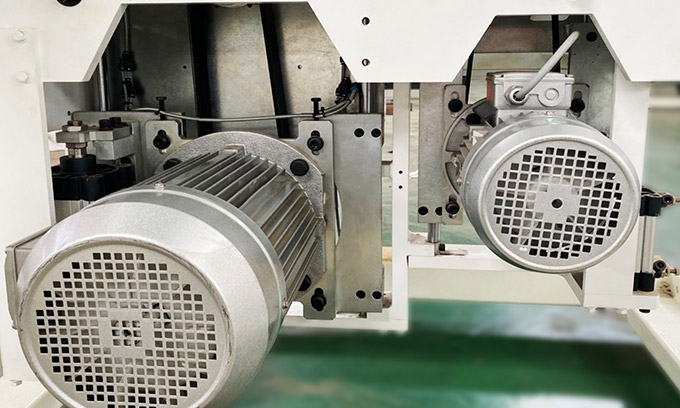
Focus on a few hard numbers. Spindle rigidity and bearing quality determine hole straightness at larger diameters. Repeatability governs jig-less setups—look for advertised repeatability under 0.2 mm if you want clean hinge and dowel alignment. Tool-change time and magazine capacity matter if you use varied diameters. Clamp layout and table flatness affect stack boring. Check dust extraction paths; clogged chips ruin pneumatics and sensors. Finally, control compatibility with your CAD/CAM or cabinet software saves hours on nesting and hole-map transfers.
Common mistakes that cause downtime
Buying by price alone. Under-spec’ing the spindle and bearings for the largest bits you’ll use. Assuming a table-mounted stop will hold position without verifying table flatness and clamping force. Skipping heat and chip management—wood dust and resin heatwarp holes. Neglecting spare parts access and service contracts. Each of those cuts uptime more than raw cycle time figures suggest.
Viable alternatives and quick trade-offs
Standalone multi-borer: high throughput, limited flexibility. Best for single repetitive part families. CNC boring/routing center: flexible, better for mixed jobs and complex geometry but higher initial cost and programming needs. Dowel inserter + simple drilling jig: low cost for low-variety, high-precision cabinet lines. Combine a panel saw for cutting panels and a compact CNC/boring center for holes—this split is often the shortest path to stable output without overpaying.
Real-world anchor and proof
At LIGNA in Hannover, technicians compare cycle charts and service footprints, and the machines with clear maintenance access and modular tooling stand out. Shop-floor teams often pointed to real examples where a dedicated computerized wood cutter reduced rework by visible margins—same operator load, fewer rejects, predictable daily output. That kind of field feedback matters more than marketing blurbs.
Installation and setup pitfalls to avoid
Don’t mount a boring head on a poorly supported gantry and call it precise. Verify foundation and anchor points. Match vacuum/air capacity to tooling demands; weak vacuum means loose parts and variable hole depth. Test fixturing with full-speed runs before committing to production. Calibrate with reference blocks and keep a repeatable verification routine—daily checks cost minutes but prevent hours of troubleshooting.
Buying checklist—practical and short
1) Measure required tolerance and daily part count. 2) Confirm spindle spec for your largest tooling. 3) Inspect clamp layout and dust routing. 4) Validate software compatibility with your part data. 5) Ask for clear service intervals and local parts availability. 6) Run a live demo with your worst-case part. Those six items separate workable choices from expensive regrets.
Final synthesis
Solve the single biggest operational mismatch first: give panel cutting and boring the machines they need, not the same machine hoping for compromise. Practical choices—matched tooling, verified specs, real demo runs—bring repeatable production and lower waste. That kind of clarity is why experienced shops align system choices with suppliers who document serviceability, tooling ranges, and matching equipment like HUAHUA CNC rather than guessing at a one-size-fits-all solution.
